We will demonstrate the mapping of the subject area to the DW model proposed in the project using the example of IA, which can perform the functions of an assistant when working with text materials in e-learn. The scenarios of the subject area are outlined in fig. 2.
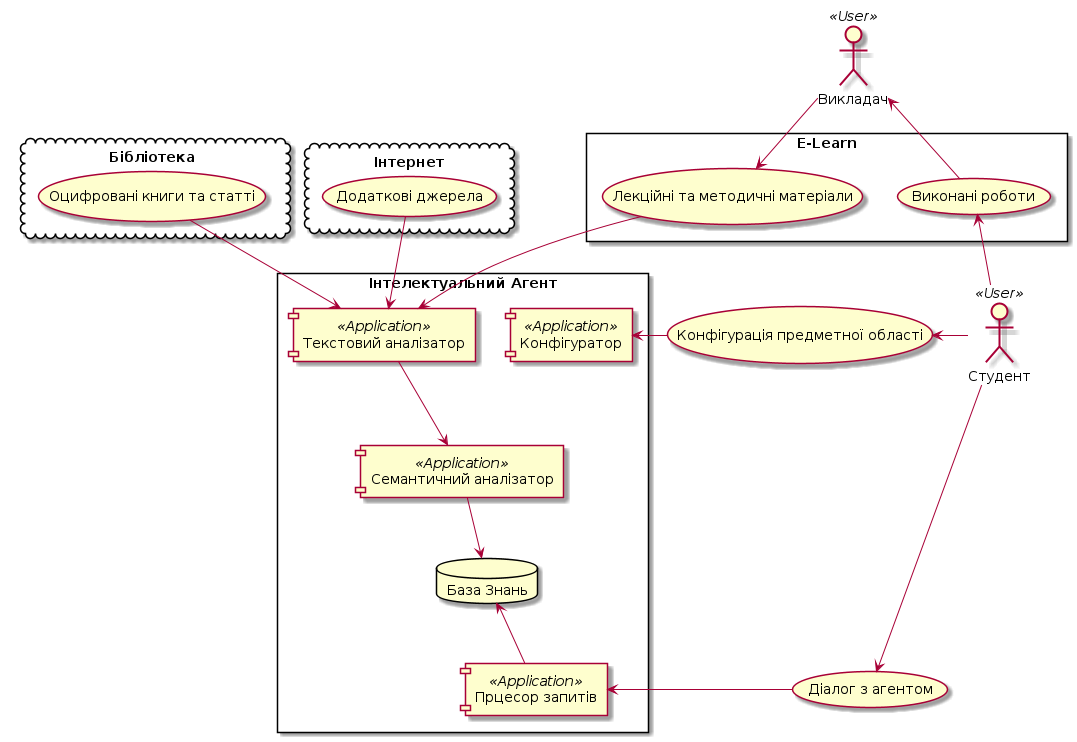
The KB must be configured to display domain entities by specifying model metadata.
From the point of view of interrelationships between categories, part of the metadata can have the following composition. Categories (C): "Author", "Document", "Sentence", "Word". Relation (R): "is author", "consists of". Relationship between categories (RC): "Author"-"is author"-"Document", "Document"-"consists of"-"Sentence", "Sentence"-"consists of"-"Word".
For example, the relationship between the categories "Author"-"is author"-"Document" (rc) means that the relationship (rco) can be established from the object (ofrom), which is attached to the category "Author" (co) “is author” (r) to the object (oto), which is attached to the category “Document” (co).
Attribute-type metadata will allow attribute values to be attached to all model entities.
Attributes (A): "Name", "Title", "Number". Attributes of categories (AC): "Name" - "Document", "Name" - "Author". Attributes of relations (AR): “Number”-“consists of”.
For example, the attribute of the category “Name”-“Author” (ac) indicates that the object (o) that is attached to the category “Author” (co) can have the attribute (a), the attribute of the relation “Number” -“consists of” (ar) means that relations between categories (rc) and between objects (rco) can have attribute (a).